〜17日後に帰ってきたら庭がジャングルになってた。After 17 days of trip, my garden looks like a jungle.〜
<リスト>
- とりあえず、芝刈りしたり、ヒューゲル床に水やりしたり、雑草取ったり。
- そして、ボカシコンポストをEarth Machineに入れる。
- 落ち桃キャッチャーを片付ける。
- 見頃:アサガオ、キンセンカ、スイカ、キュウリ、イチゴ、ダリア、クローバー
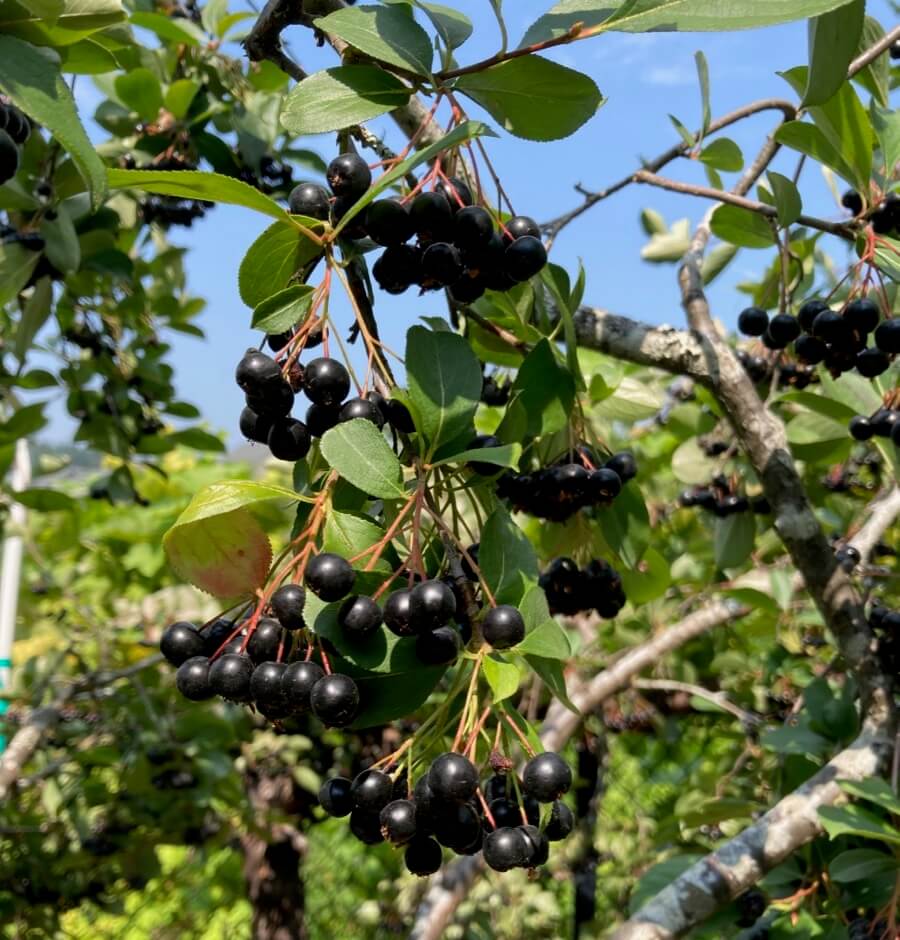
- 収穫:アロニア(写真上)、キュウリ🥒🥒🥒、イチゴ🍓🍓🍓、シソ、ヨモギ、ブルーベリー
<List>
- First, mow lawn, water Hugel Bed, pull weeds.
- Then, move Bokashi compost to Earth Machine.
- Put away “Falling Peach Catcher”.
- Peak Bloom: Morning Glory, Calendula, Watermelon, Cucumber, Strawberry, Dahlia, Clover
- Harvest: Aronia (Picture Above), Cucumber🥒🥒🥒, Strawberry🍓🍓🍓, Shiso, Mugwort, Blueberry
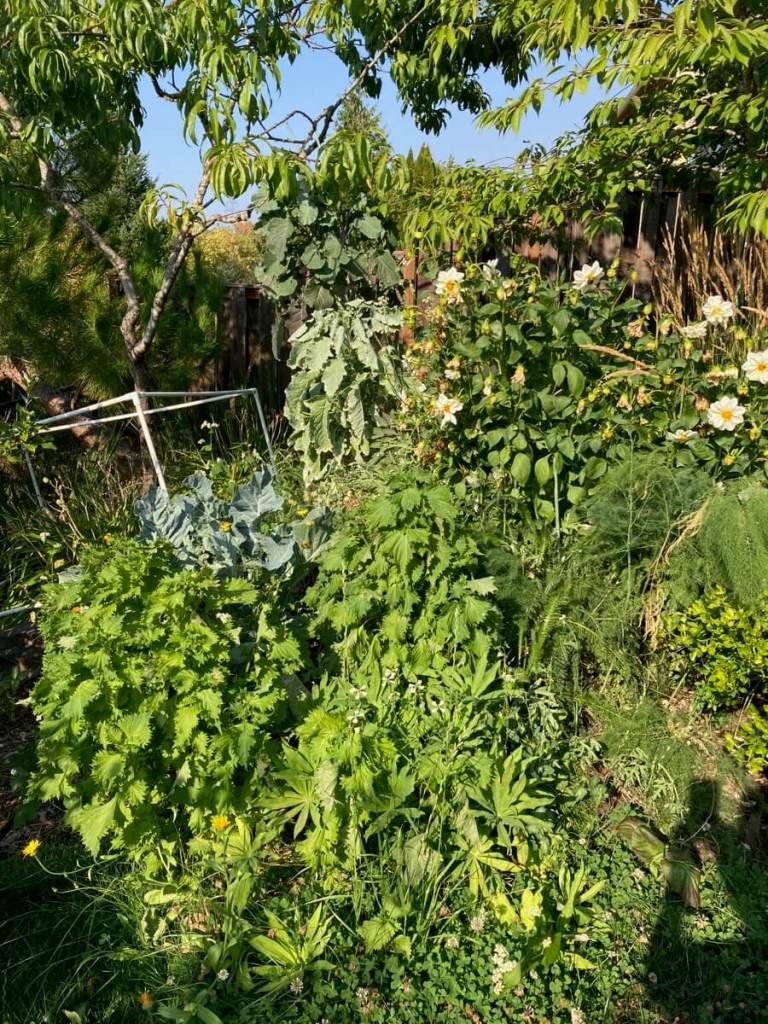
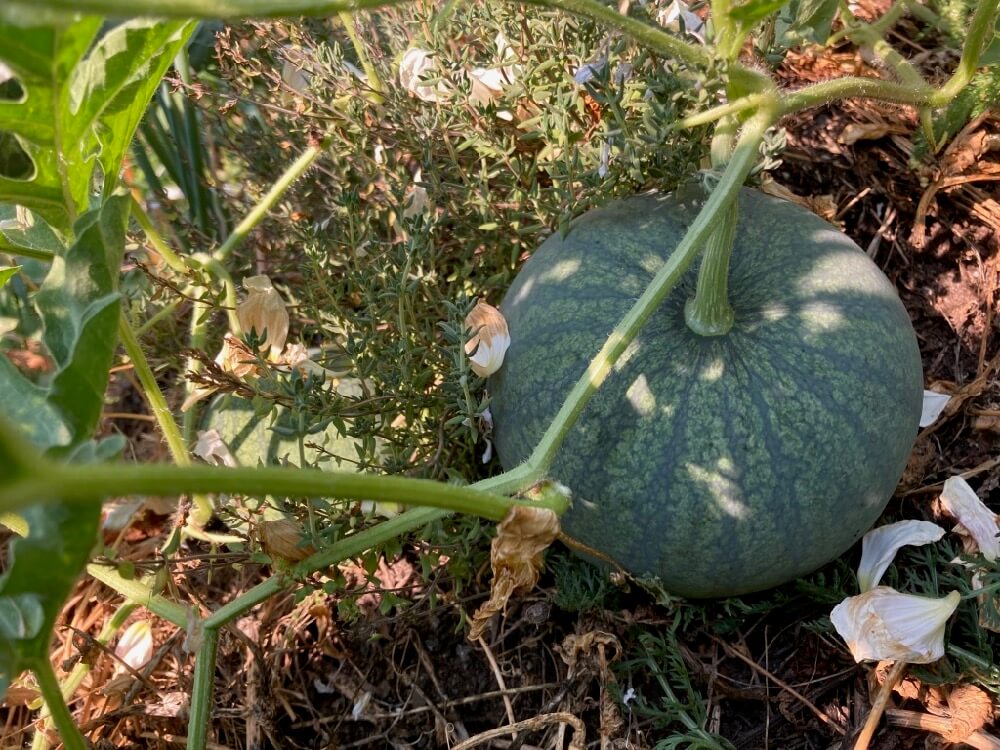
日本に17日間一時帰国して、3日前にポートランドに戻ってきました。ポートランドでも40度の暑さを記録したそうで、スプリンクラーのあたらないヒューゲル床が干からびてないか心配でした。特に、ようやく育ち始めたスイカがダメになってたら泣けるーと思っていましたが、一週間に一度の水やりを頼んでおいた隣人が心配してもっと頻繁に水やりをやってくれていたおかげで、全ての作物が生き残ってました!もちろんスイカちゃんも💓 ありがたや〜。さらに、なり始めていたイチゴやキュウリ、ブルーベリーも収穫して食べておいてくださったので、腐ったりカビの生えた作物も少なくて、本当に助かりました。隣人のお子様たちも「お隣でユーピック」を楽しんでくれたみたいで嬉しい!
I returned to Japan temporarily for 17 days and came back to Portland 3 days ago. I heard that it was 105 degrees in Portland, so I was worried that my hugel bed, which is not hit by the sprinkler, was drying up. In particular, I thought I would cry if my watermelon, which had finally started to grow, was ruined, but my neighbor, who I asked to water my hugel bed once a week, was worried and watered it more often. Thanks to her, all the crops survived! Of course, my watermelon, too💓 Thank you〜. In addition, they harvested strawberries, cucumbers, and blueberries that had begun to grow when I left, so there are few rotten or molded crops left. I’m glad that my neighbor’s children also enjoyed “U-pick@next door“!
そして、うちの庭はやっぱりジャングルになっていました。シソやノコギリソウ、イチゴの葉はぼうぼう。イタリア松やSunshine Daisy Bushもグンと成長していました。アロニアは実がたわわになっていて、重みで枝が地面につくほど。早速、庭の手入れをしたり、色々な作物を収穫しました。収穫したシソとヨモギの葉は乾燥させ、イチゴとアロニアはジャムに。
And, as I imagined, my garden turned into a jungle after all. Shiso, yarrow, and the leaves of strawberries are voluminous. The Italian pine and the Sunshine Daisy Bush were also growing strongly. The aronia has so much fruit that it touches the ground under its weight. I immediately took care of the garden and harvested various crops. Harvested Shiso and mugwort leaves are dried, and strawberries and aronia are used to make jam.
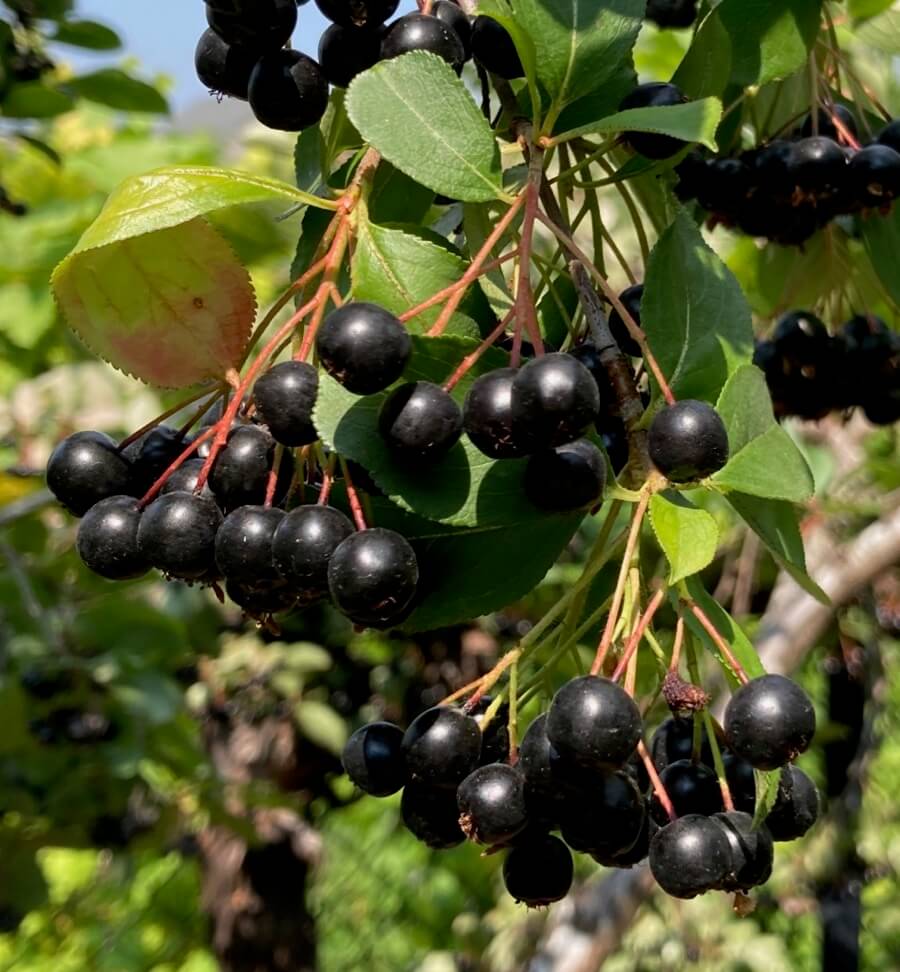
さて、お題のアロニア。色々と優秀です。120-150cmくらいの落葉低木で、春に白い可愛らしい花を咲かせ、夏の終わりに黒い実をつけます。秋になると葉っぱが真っ赤になり、ゴージャスな落葉を見せてくれます。暑さにも寒さにも強く、半日以上の日光でOKなので育てやすい。姿もさることながら、食用としても素晴らしい。たわわになる実は栄養が豊富。アントシアニンなどのポリフェノールや食物繊維が豊富で、健康食品店でスーパーフードとして売られています。
Well, Aronia in the title. Excellent in many ways. It is a deciduous shrub about 4-5 feet tall, and has lovely white flowers in spring and black berries in late summer. In autumn, the leaves turn bright red and show off the gorgeous fallen leaves. It is resistant to heat and cold and can be grown in half sun, so it is easy to grow. In addition to its appearance, it is also wonderful for eating. The plump fruit is rich in nutrients. Rich in polyphenols such as anthocyanins and dietary fiber, it is sold as a superfood in health food stores.
ただし、アロニアの実はとても渋いです。生で食べるより、ジャムやジュースにした方が食べやすいでしょう。それでも渋みは残るので、適度に蜂蜜や砂糖を入れてお召し上がりください。また、マフィンやパンに入れて焼くとなかなかいけます。ブルーベリーを使った時と比べてベチャっとしにくいので、マフィンとパンには個人的にアロニアを入れた方が好きです。<一つ注意!>アロニアを加工するときは色がつきます。手や服はもちろんのこと、鍋やしゃもじも全て紫色に!汚れてもいい服を着て調理しましょう。ワインにもできるようですね。いつか挑戦したいです。
However, aronia berries are very tart. Jam and juice are easier to eat than eating raw. Even so, the astringency remains, so please enjoy it with honey or sugar in moderation. Also, it’s pretty good to put it in a muffin or bread. I personally prefer aronia over blueberries in muffins and bread because it’s less mushy. <One Caution!> Aronia will color things when processed. Not only hands and clothes, but also pots and spoons get all purple! Wear clothes you don’t mind getting dirty when cooking. It seems that you can make Aronia wine, too. I would like to try it someday.
本当は、アメリカ在来種という事でうちの庭に植えたのですが、東海岸の在来種であってパシフィックノースウエストの在来種ではない事を、つい最近知りました。道理で、鳥さんたちがあまり食べに来ないわけだ。冬の終わりの餌がない時期に、ロビンやワキアカトウヒチョウ、メキシコマシコが来るくらい。ということで、ネットをかけて鳥から守る必要もありません。在来種を植えてサステナビリティに貢献したかったんですけどね。いいやら悪いやら。なかなか完璧にはできませんね。
Actually, I planted Aronia in my garden because it’s a native plant in America, but I just recently learned that it’s an East Coast native, not a Pacific Northwest native. No wonder the birds don’t come to eat very often. At the end of winter, when there is no food, only robins, towhees, and house finches come. So you don’t need to cover it with a net to protect it from birds. I wanted to contribute to sustainability by planting native
species. Good or bad. You can’t do it perfectly.
 オレゴンエコライフ Oregon Eco Life
Leave a comment